Titanium vs stainless-steel chopper blades: which one for your kitchen?
"Titanium blades" is on the box of every RADOCO chopper. It is not marketing — it changes how the blade behaves with acidic food, how long it stays sharp and how it looks after a year. But stainless steel is a perfectly good material, so which one do you actually need?
What a titanium blade is
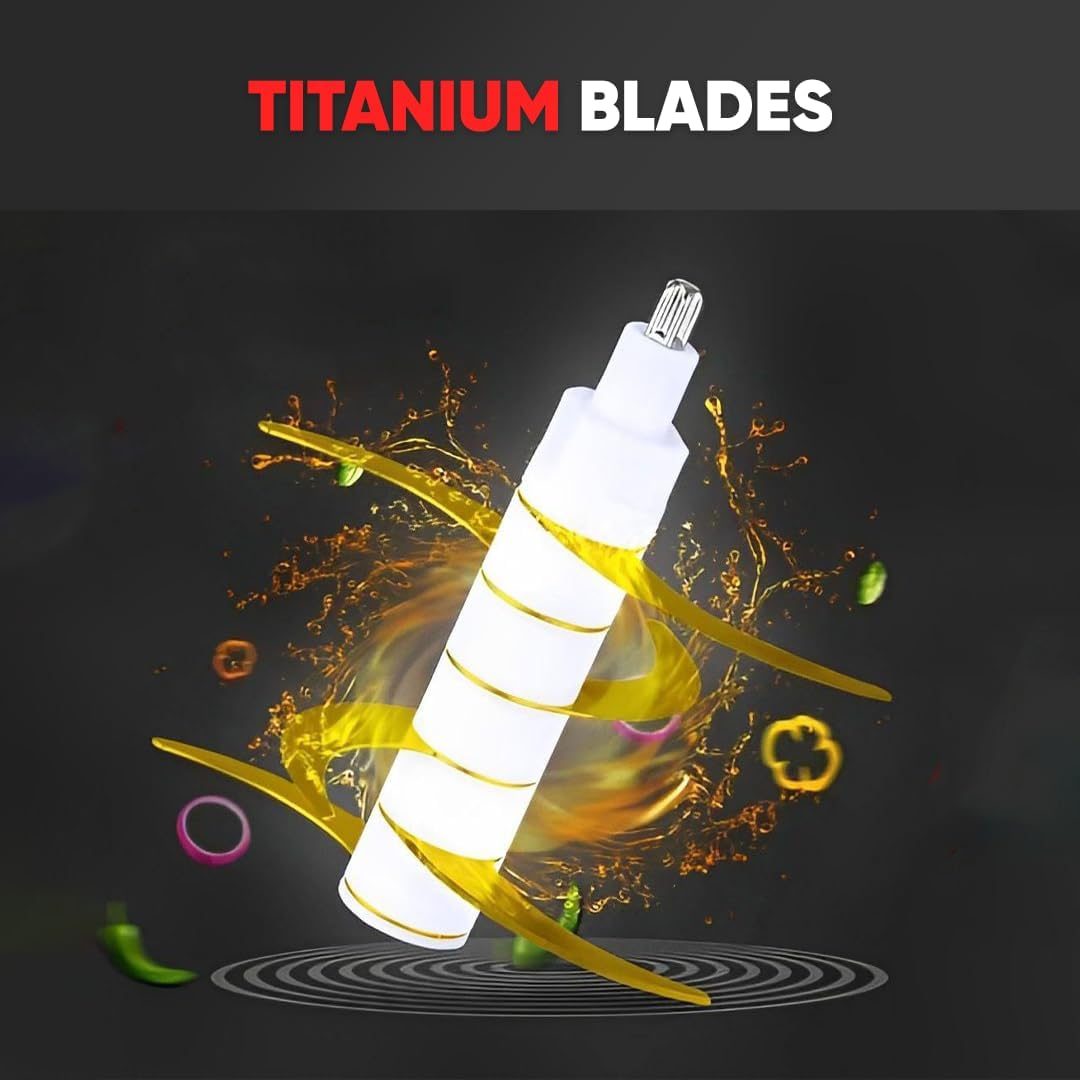
The blade itself is hardened stainless steel. A thin layer of titanium alloy is bonded to the surface, most importantly on the cutting edge. Titanium is harder than the steel underneath, so the edge wears more slowly, and it is chemically inert, so lemon juice, tomatoes and onions do not react with it.
Where titanium wins
- Edge life. In our kitchen the titanium-coated edges on the RD-2010T were still slicing paper-thin after 18 months of daily onions; an uncoated steel set from another brand needed replacing at 12.
- No metallic taste. Chopping garlic or tomatoes with plain steel can leave a faint metallic note. Titanium doesn't.
- No discolouration. Steel blades go grey and pitted around the hub; titanium-coated ones stay clean.
- Hard ingredients. Ice, nuts, parmesan rind, frozen fruit — the harder edge does not chip.
Where stainless steel is fine
If you chop soft vegetables twice a week and wash the bowl straight away, plain steel will last for years. The gap is in heavy use, acidic ingredients and hard ingredients. Titanium costs a little more; for a chopper you use every day, that is the better money.
The bowl matters as much as the blade
Blades are only half the decision. The bowl is what you fill, empty, wash and — occasionally — drop.
| Model | Bowl | Power | Blades | Best for |
|---|---|---|---|---|
| RD-2010T | 3 L Pyrex glass | 1800 W | 6 × titanium | Big batches, meat, ice, dough |
| RD-2011GT | 3 L glass | 650 W | 6 × titanium | Everyday family cooking |
| RD-2011ST | 3 L stainless steel | 500 W | 6 × titanium | Unbreakable, light, hot ingredients |
| RD-2011DT | 2 L + 0.5 L glass | 400 W | 2 sets × titanium | Small jobs, spice pastes, baby food |
- Glass does not stain, does not hold smells and lets you see the texture. It is heavier and can break if dropped.
- Stainless steel is unbreakable and can take hot ingredients straight from the pan — ideal for soups and hummus. You cannot see inside, so pulse and check.
- Twin bowls stop you dirtying a 3 L bowl for two cloves of garlic.
Two speeds and the pulse
All four models have two speeds. Speed 1 is for rough chopping and keeping texture (salsa, tabbouleh); speed 2 is for purées and pastes. The most useful control is the pulse — short bursts give you control over texture and stop everything turning to mush. See ten things to make in a chopper besides onions.
Looking after titanium blades
Hand-wash the blade unit, dry it immediately and store it on the spindle, not loose in a drawer. The coating is hard but not indestructible: never run the chopper empty, and never try to sharpen a coated edge — you will remove the titanium.
Frequently asked questions
Are titanium blades really titanium?
The blade body is hardened stainless steel; the cutting edges are coated with a titanium alloy layer. That is what gives the extra hardness and the gold or dark colour — a solid titanium blade would be too soft to hold an edge.
Can a chopper crush ice?
The RD-2010T and RD-2011GT with their six titanium blades handle ice cubes in short pulses. Fill no more than a third of the bowl and pulse in 2-second bursts.
Which RADOCO chopper is best for small jobs?
The RD-2011DT twin chopper comes with a 0.5 L bowl for garlic, ginger, chillies and herbs alongside a 2 L bowl for everything else.