
How to make real espresso at home with a 15-bar machine: a beginner's guide
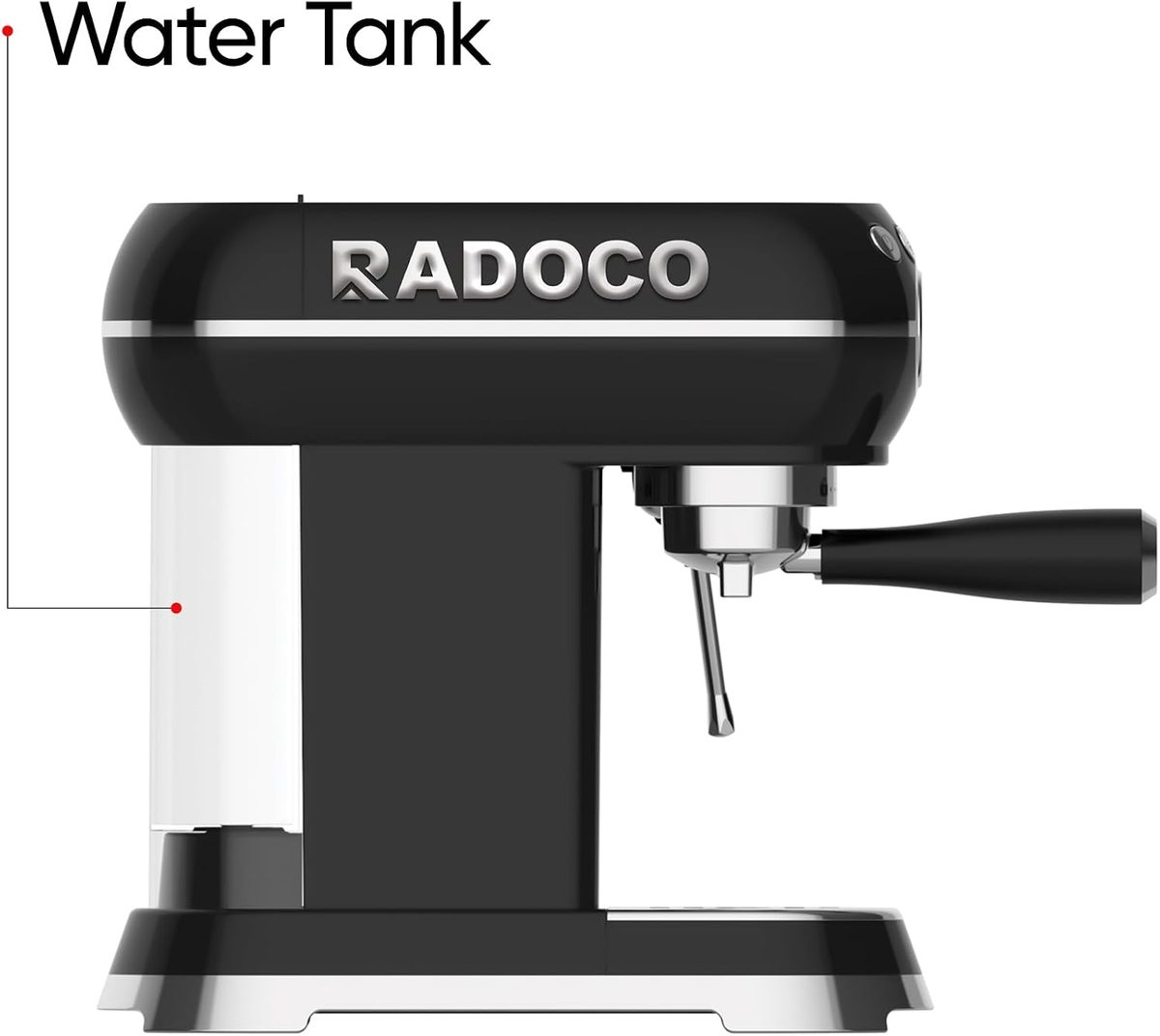
A café espresso is not magic; it is four variables kept consistent. On a semi-automatic machine like the RADOCO RD-LE6400 you control all four yourself, which is the whole point. Here is the method, then how to fix a shot that tastes wrong.
What you need
- Fresh beans (roasted within the last month) or a bag of espresso grind
- A grinder with fine settings, or the pre-ground bag
- A kitchen scale (a coffee scale is nice, not essential)
- The machine, warmed up for 10 minutes with the portafilter locked in
The four variables
1. Grind — fine, like table salt
Too coarse and water rushes through in 15 seconds (sour, thin). Too fine and it chokes (bitter, drips). Start one step coarser than the finest setting and adjust from there.
2. Dose — 16–18 g for a double
Weigh the coffee into the double basket. Level it with your finger. Consistency in the dose is what makes the next two variables work.
3. Tamp — firm and level
Press straight down with about the weight you would use to push a doorbell firmly. Level matters more than force; a tilted puck channels water through one side.
4. Time — 25 to 30 seconds
Lock in, start the pump, and count. You are aiming for about 36 g of espresso in the cup from an 18 g dose (a 1:2 ratio) in 25–30 seconds. The RD-LE6400 pre-infuses — wets the puck at low pressure for a moment before full pressure — which makes extraction more even and forgives small mistakes.
Reading the shot
| Taste | What happened | Fix |
|---|---|---|
| Sour, thin, fast (under 20 s) | Under-extracted | Grind finer, or dose up 1 g |
| Bitter, harsh, slow (over 35 s) | Over-extracted | Grind coarser, or dose down 1 g |
| Balanced, sweet, thick crema | Correct | Change nothing. Write the settings down. |
Change one variable at a time. Grind is the big lever; dose is the fine adjustment.
Steaming milk that pours
- Fill a cold jug a third full with cold whole milk.
- Purge the wand for a second, then put the tip just under the surface, jug tilted so the milk spins.
- Stretch: keep the tip at the surface for 3–5 seconds until the milk grows by about a third. You should hear a gentle paper-tearing sound, not screaming.
- Texture: lower the wand a little deeper and keep the whirlpool going until the jug is too hot to hold comfortably (about 60–65 °C).
- Wipe and purge the wand immediately. Tap the jug, swirl, and pour.
Latte art will not happen on day one. Silky, glossy milk with no big bubbles will, and that is what changes the taste.
Keeping the machine happy
- Backflush with water (run the pump with a blank basket) after every session.
- Descale monthly in Dubai and Abu Dhabi — the water is hard. Use the same vinegar method as for a kettle, then run three tanks of clean water through.
- Empty the drip tray and rinse the 1.5 L tank daily.
The RD-LE6400 comes in glossy black and cream, with a 2-year guarantee. Pair it with the matching retro kettle and toaster set for a complete counter.
Frequently asked questions
Do I need 15 bar of pressure?
Espresso is extracted at around 9 bar at the coffee. A 15-bar pump gives the headroom to reach that reliably through a fine, tightly tamped puck and to maintain it through the shot.
Can I use pre-ground coffee?
Yes, choose a bag labelled "espresso grind". Fresh grinding is better, but a good espresso grind from a bag beats a stale home grind.
Why is my espresso sour?
Under-extracted — grind finer, tamp firmer, or use a little more coffee. Bitter is the opposite: grind coarser or use less.